BOMA Waste containers
We are happy to guide you towards sustainable waste management with our high-quality range of waste bins, containers, and sorting solutions.
Waste sorting at work becomes much easier when the right waste streams are brought together in the right place and employees can immediately see what belongs where. Start by analysing your waste, then choose a clear sorting system and make sure your internal collection process supports it too. That way, correct sorting and recycling become easier for everyone.
A good waste management approach does not start with the waste bin itself, but with understanding what your organisation needs.
µWhich waste streams occur most often? How much waste is generated? Where does it arise? How much does disposal cost? And how can you make sure the system is easy for people to use in their daily life?
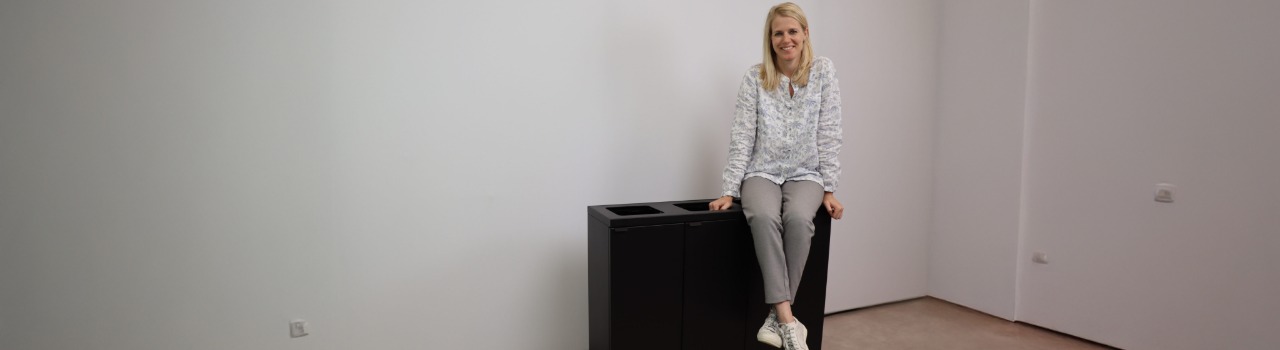
According to Kim Berkvens, Product Manager at BOMA, this analysis is sometimes underestimated. A waste project involves more than simply placing a few new bins. It affects purchasing, cleaning, waste processing, costs and the everyday behaviour of employees.
Her advice: "Standardise where possible, but use tailored solutions where needed. And don't forget: informing and raising awareness are essential."
Within your organisation, use the same sorting logic as much as possible, while taking the function of each space into account. A busy staff restaurant has different requirements from an office floor, entrance hall or warehouse.
Most people are willing to sort correctly. The key is making the right choice clear at the moment they throw something away.
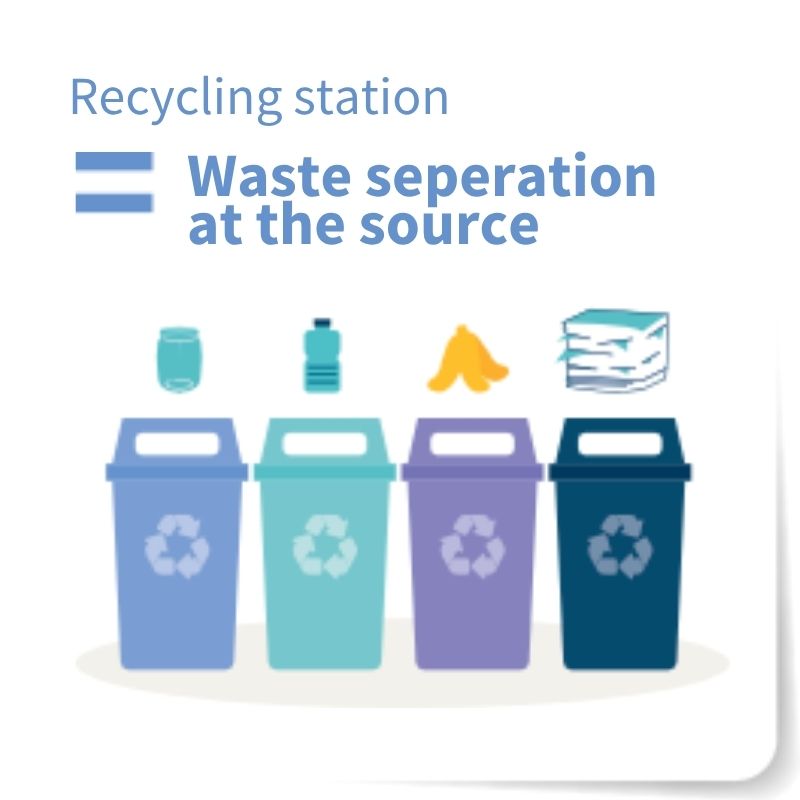
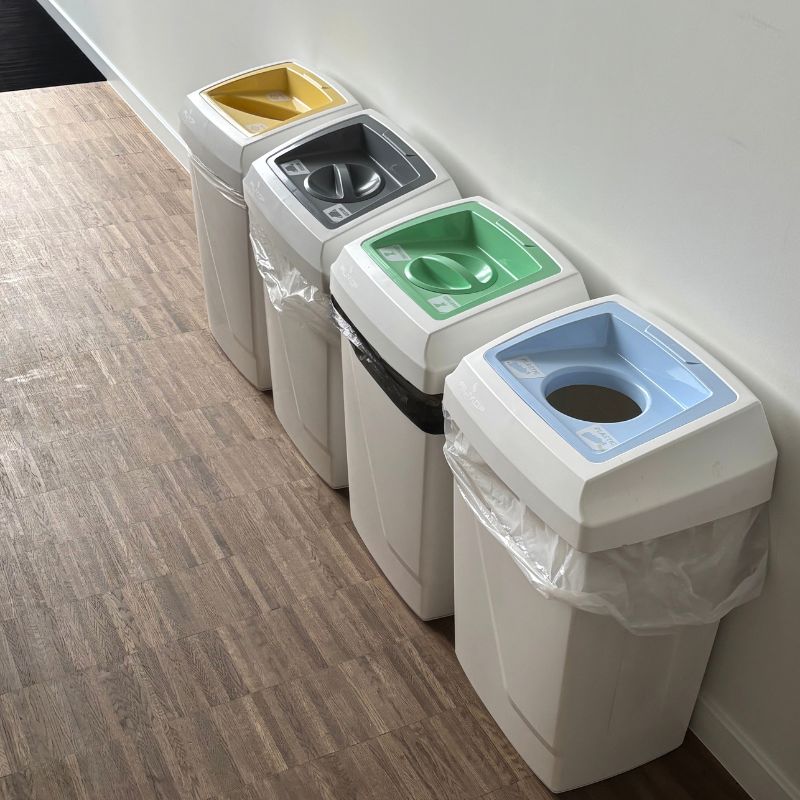
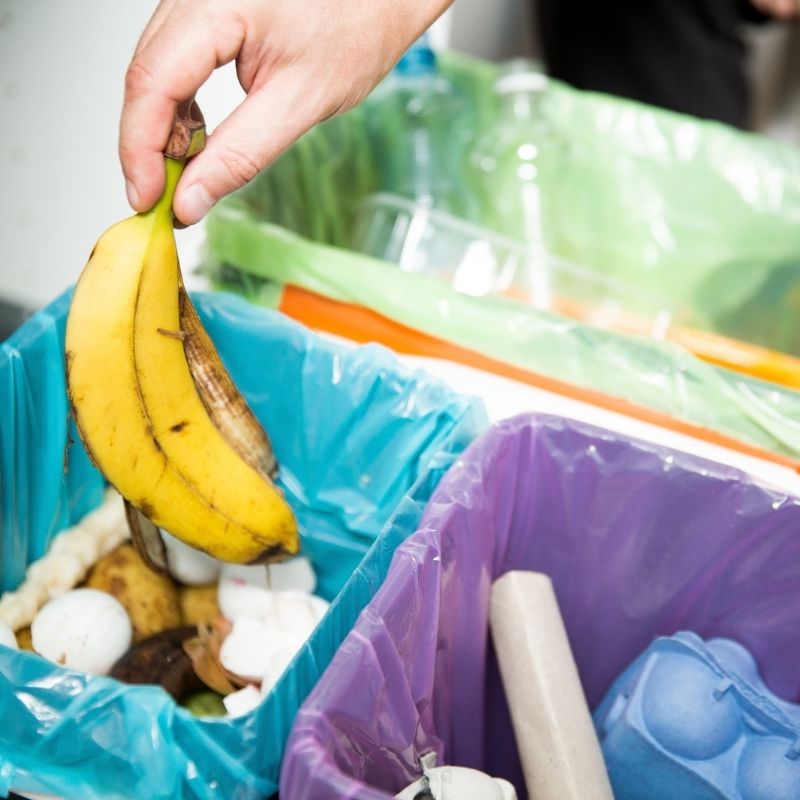
Central waste sorting stations can help. Instead of placing separate bins in different locations, you bring several waste streams together in one recognisable point. Think of PMD, paper and cardboard, organic waste and residual waste.
Design matters too. Waste bins no longer need to be hidden away in a dark corner. They increasingly form part of the office, reception area or canteen, so they can be both functional and well designed.
A modular waste station such as the Bomabin Select Bica fits this approach well. Different waste streams can be combined into one clear sorting point, while front-opening doors and integrated bag holders make changing waste bags more practical for cleaning staff.
A good waste station does more than make correct behaviour possible. It makes the right choice the easiest choice.
When we think about sustainability, we quickly focus on the material a product is made from. That is important, but it is not the whole story.
A sustainable waste bin should first and foremost remain useful for a long time. Choose a solution that is sturdy, matches the amount of waste produced and can adapt when your waste streams change.
Look at the complete system too. A waste bag that is too large leads to unnecessary material use, while a bin that is too small results in more frequent emptying rounds. The simple rule therefore still applies: choose the right bag for the right bin.
The BOMA range, for example, includes HD waste bags made from recycled material. By matching the bag, bin and waste volume correctly, you can reduce material use without making everyday work more difficult.
Some waste stations are also available with inner bins. These can be made from recycled plastic, metal or even cardboard. By using these inner bins for certain waste streams, such as paper and cardboard, you may not need a waste bag at all, which creates an additional saving.
Sustainable waste management also starts before something ends up in the bin. Preventing waste and using materials for longer is still better than having to sort them afterwards.
Correct sorting at the waste station is only the first half of the process. The different waste streams also need to remain separated afterwards.
This is exactly where things can go wrong. Employees sort carefully, but during cleaning the bags are combined again because the cleaning trolley only has one waste bag holder.
That is why it is important to map the internal waste route as well. Who empties the bins? How many waste streams does that person collect? How far away are the central containers? And can the process be made more efficient and ergonomic?
For locations with several waste streams, a Greenspeed C-Shuttle waste collection trolley with three compartments can be a practical solution. Cleaning staff can collect different waste streams separately during the same round, without constantly walking back and forth with individual bags.
This also makes waste sorting more people-focused: the system should not only be clear for the person disposing of waste, but also practical for the person collecting it every day.
A few simple agreements can make a big difference in practice:
This feedback allows you to improve your approach step by step. Waste sorting is not a one-off project, but a system that can be adjusted regularly.
Technology may also help in the future. Think of sensors that measure fill levels or weight, or systems that monitor waste streams. Not every organisation needs these applications, but they can become useful when you want to measure and optimise waste streams more accurately.
Good waste management ultimately comes down to simplicity. Analyse what your organisation needs, standardise where possible and adapt where necessary. Make the right choice clear for employees, and do not forget the people who collect the waste afterwards.
At the same time, look beyond the waste bin. By preventing waste, purchasing more intelligently and using materials for longer, you also reduce the amount of waste that needs to be sorted and processed.
Want to organise your waste streams more intelligently? Start by mapping which types of waste are generated where and how they are currently collected. From there, BOMA can help you put together the right combination of waste stations, waste bags and internal collection solutions.
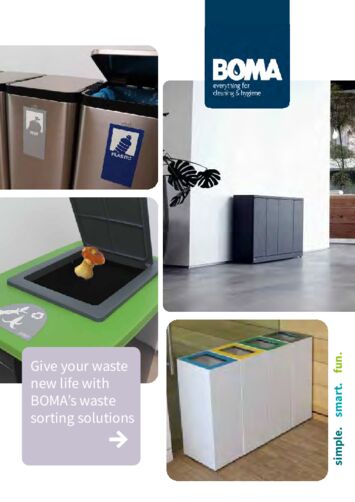
Does your organization need tailored advice or inspiration for a waste bin project? Download our latest brochure on waste solutions and discover how we can help you create a circular future.
We are happy to guide you towards sustainable waste management with our high-quality range of waste bins, containers, and sorting solutions.